
Senior TMC leader Abhishek Banerjee criticised the Modi government's economic policies, citing rising prices and hardships caused by demonetisation and lockdown measures during an election rally in West Bengal.

'If you read the TVK manifesto, it is doles and much more doles. But the state has been habituated to this.' 'In no way is he distinct or different from the DMK regime.'

American-born economists Robert E. Hall and Michael Woodford have been awarded the Nobel memorial prize in economics for their groundbreaking work on the microeconomic foundations of macroeconomic stabilisation, demonstrating how individual household and business actions influence the broader economy.

RBI Governor Sanjay Malhotra reiterated India's cautious stance on cryptocurrencies due to concerns over monetary sovereignty and capital flows, while actively promoting underlying technologies like distributed ledger technology and tokenisation. He also addressed the global rise in public debt and hardening bond yields, attributing it to increased government and private spending, including that driven by AI, and noted the implications of global interest rates on India's monetary policy.
'In fact, when monetary policy has been deployed, it does not distinguish between types of shocks. It goes straight for the kill.'

If the new MDR regime is rolled out from the middle of this month, as scheduled, it should count as one of the boldest political actions by the Modi government on an economic-policy issue, and a signal that it is less worried about erosion of political capital it draws from one of its key constituencies, notes A K Bhattacharya.

Union Finance Minister Nirmala Sitharaman expressed strong confidence in India achieving over 10 per cent economic growth, advocating for increased technology adoption and innovation. She urged overcoming scepticism and highlighted technology's transformative role in agriculture and public sector reforms, while also launching a new fund and book at an IIT Madras event.

'A balance had to be struck between the economic cost of taking action at this point against the need not to fall behind the curve in controlling inflation and anchoring inflation expectations.'

India's Chief Economic Advisor V Anantha Nageswaran stated that the country's balance of payments (BoP) pressure is expected to remain a continuous challenge due to rising imports, commodity dependence, high global interest rates, and intense competition for capital.

The Finance Ministry has dismissed allegations of US pressure influencing the 0.4% Merchant Discount Rate (MDR) on select UPI transactions. It clarified that NPCI guidelines prioritise RuPay credit cards on UPI and do not favour international cards. The ministry also asserted that the MDR, applicable to person-to-merchant transactions above Rs 2,000, is unlikely to increase cash transactions or cause inflation, with measures in place to prevent burdening consumers.

The Kerala Legislative Assembly has passed a motion urging the central government to completely withdraw the proposed Merchant Discount Rate (MDR) on UPI transactions exceeding Rs 2,000. Chief Minister V D Satheesan and CPI MLA K Rajan highlighted concerns that the MDR would increase business costs, harm small businesses, and reduce the appeal of digital payments, while the BJP argued it would not affect general public or small merchants.

The Goods and Services Tax (GST) Council has announced that Input Tax Credit (ITC) will now be available on health and life insurance policies provided by employers to their employees, a move expected to significantly reduce costs for businesses, especially MSMEs.

Maharashtra Navnirman Sena (MNS) chief Raj Thackeray has voiced strong concerns about the divisive role of social media in society, alleging it fuels anger and religious disputes. He also criticised the unbridled use of high-decibel sound systems, questioned the government's economic policies despite GDP growth claims, and objected to political messaging in public offices. Thackeray further addressed linguistic politics and endorsed the "Inquilab Zindabad" slogan.

Former Bangladesh Prime Minister Sheikh Hasina has strongly criticised Prime Minister Tarique Rahman's decision to skip the BRICS summit in India, calling it "immature" and detrimental to Bangladesh's national interest. She argued that the absence lost opportunities for economic development and that foreign policy should not be driven by personal considerations. Hasina also highlighted the current "grave national crisis" in Bangladesh and her intention to return to restore democracy.

'The day we start making rules purely along caste lines, we only divide society further. That's the conversation the government needs to have, and soon.'
State Bank of India's latest report highlights a 'chalk and cheese' divide in the Reserve Bank of India's recent policy communications, with the Monetary Policy Committee minutes showing a hawkish tone while the Governor's statements are more data-dependent, leading to market uncertainty regarding future interest rate hikes.

France is preparing for fresh demonstrations on October 24 with a "massive" police deployment and extended curfews, following days of violent unrest. The protests, initially sparked by school conditions, have broadened into a nationwide campaign against rising living costs and declining public services, leading to over 2,500 arrests and significant damage.
The International Monetary Fund (IMF) has increased India's growth forecast to 7 per cent for 2026-27, up from 6.4 per cent, attributing this robust outlook to resilient domestic demand and strong services activity, positioning India as one of the fastest-growing major economies.

India has secured a spot among the top 10 leading emerging-market performers in artificial intelligence (AI) readiness, with private investment in AI more than tripling to USD 4.1 billion in 2025, according to a new World Bank report.

The Reserve Bank of India (RBI) has increased its GDP growth forecast for the current fiscal year (FY27) by 40 basis points to 7.1 per cent, acknowledging the resilience of domestic economic activity despite global headwinds and geopolitical tensions.

A century on, India has adopted the Left's welfare ideas, but not the Left. Why do people borrow the promises, then vote for the temple? questions Binu Alex.

NITI Aayog has recommended treating data centres as strategic infrastructure rather than mere investment projects, releasing a report titled 'Data Centre Evaluation Framework to Help States Plan for Sustainable Growth'. The report advocates for common standards, central government guidance, and a structured approach for states to manage data centre growth, considering resource requirements and economic benefits.

A CII white paper released Thursday outlines a strategy for India's media and entertainment sector to achieve a USD 100 billion valuation by the early 2030s, requiring an annual growth rate of 15 per cent and significant policy reforms. The paper identifies key areas for growth, including broadcasting reform, anti-piracy measures, and investment in regional markets.

US Secretary of State Marco Rubio's visit to India this week underscores the complex dynamics of global energy policy, as Washington re-evaluates sanctions on Russian oil buyers amidst India's continued reliance on Russian crude.

India's wholesale price-based inflation surged to 11.39 per cent in September, up from 9.92 per cent in August, primarily driven by increasing prices of food, manufactured items, and fuel and power.

External Affairs Minister S Jaishankar stated that the stability of the Line of Actual Control (LAC) is essential for normalising India-China relations, asserting that border disturbances will have consequences. He connected trade and investment growth to border peace and highlighted significant economic issues, including a severe trade imbalance and lack of market access for India in China. Jaishankar also referenced the 2020 Galwan clashes as a critical turning point, underscoring the profound impact of border tranquillity on the overall bilateral relationship.
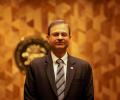
A 25-basis-point increase would restore some real monetary restraint when expected inflation has risen, liquidity remains easy and growth is strong, points out Amarendu Nandy.

Jantar Mantar, a historic protest site in New Delhi, is facing de-notification by Delhi Police, raising concerns about its future as a space for public dissent. The site has been central to numerous significant movements, from Anna Hazare's anti-corruption fast and the Nirbhaya protests to recent agitations over NEET paper leaks and wrestlers' grievances. Its proximity to power centres made it a crucial platform for citizens to voice concerns and demand accountability, a role now threatened by its potential loss of status.

India is deeply concerned by the growing consolidation of Pakistan-backed jihadi and radical Islamist groups in Bangladesh, particularly in the strategically vital Chittagong Hill Tracts, which experts warn is transforming the country into a new safe haven for these networks and posing a direct threat to India's security.

'While the population remains relatively young, its age structure is beginning to shift, setting the stage for a much older population later this century.'

The CPI and CPI(M) have announced they will contest one Assembly segment each in the upcoming Tamil Nadu bypolls, while continuing their outside support for the ruling TVK. This decision creates a five-cornered contest and highlights the Left parties' independent stance, aimed at preventing indirect BJP influence and addressing public issues.

African digital financial services platform, Airtel Money, has successfully debuted on the London Stock Exchange, marking the exchange's largest initial public offering (IPO) in several years with an implied market capitalisation of about USD 7 billion.

Marco Rubio will visit Mumbai and Jamnagar to discuss energy cooperation as S Jaishankar says India-US trade talks are nearing a landing point, with a few issues unresolved.

September marked India's highest-ever monthly EV retail volume. More than one in nine two-wheelers retailed in September was electric.

India's exports saw a significant 23 per cent increase, reaching USD 44.4 billion in September, while the trade deficit narrowed to USD 30.21 billion, according to recent government data.

Union Minister Ashwini Vaishnaw warned of increased global turbulence from tech disruptions, AI, and financial risks in the coming years. He stated that India is strengthening its economic and technological resilience to protect its growth from external shocks. India is focusing on domestic manufacturing and design in critical tech areas while maintaining global integration, with trust becoming as crucial as cost in supply chains.

US President Donald Trump has threatened the European Union with "very heavy tariffs" if he perceives their actions as hostile, specifically in response to Canada's efforts to deepen economic and strategic ties with the EU. This comes as European Commission President Ursula von der Leyen invited Canada to become the EU's first "associate member" to strengthen resilience amid global trade uncertainties and US trade policies.

Punjab & Sind Bank MD and CEO Swarup Kumar Saha clarified that merchants cannot pass on Merchant Discount Rate (MDR) charges to customers for UPI payments, ensuring consumers only pay the displayed price. The new MDR structure, effective October 15, applies a 0.4% charge on P2M transactions above Rs 2,000, with specific flat rates for certain sectors, but small-value transactions remain free.

Uttar Pradesh Chief Minister Yogi Adityanath announced the state's ambitious shift from mobile phone assembly to advanced microchip manufacturing, data centres, and artificial intelligence. He highlighted significant investments and growth in the digital economy, attributing the transformation to the "double-engine government's" alignment with national initiatives like 'Make in India' and 'Aatmanirbhar Bharat'. Adityanath also criticised previous administrations for hindering the state's potential.

India's GST Council has approved changes allowing small online sellers to register in states without physical premises by using an e-commerce operator's warehouse as their principal place of business, aiming to boost national sales for small businesses.
